
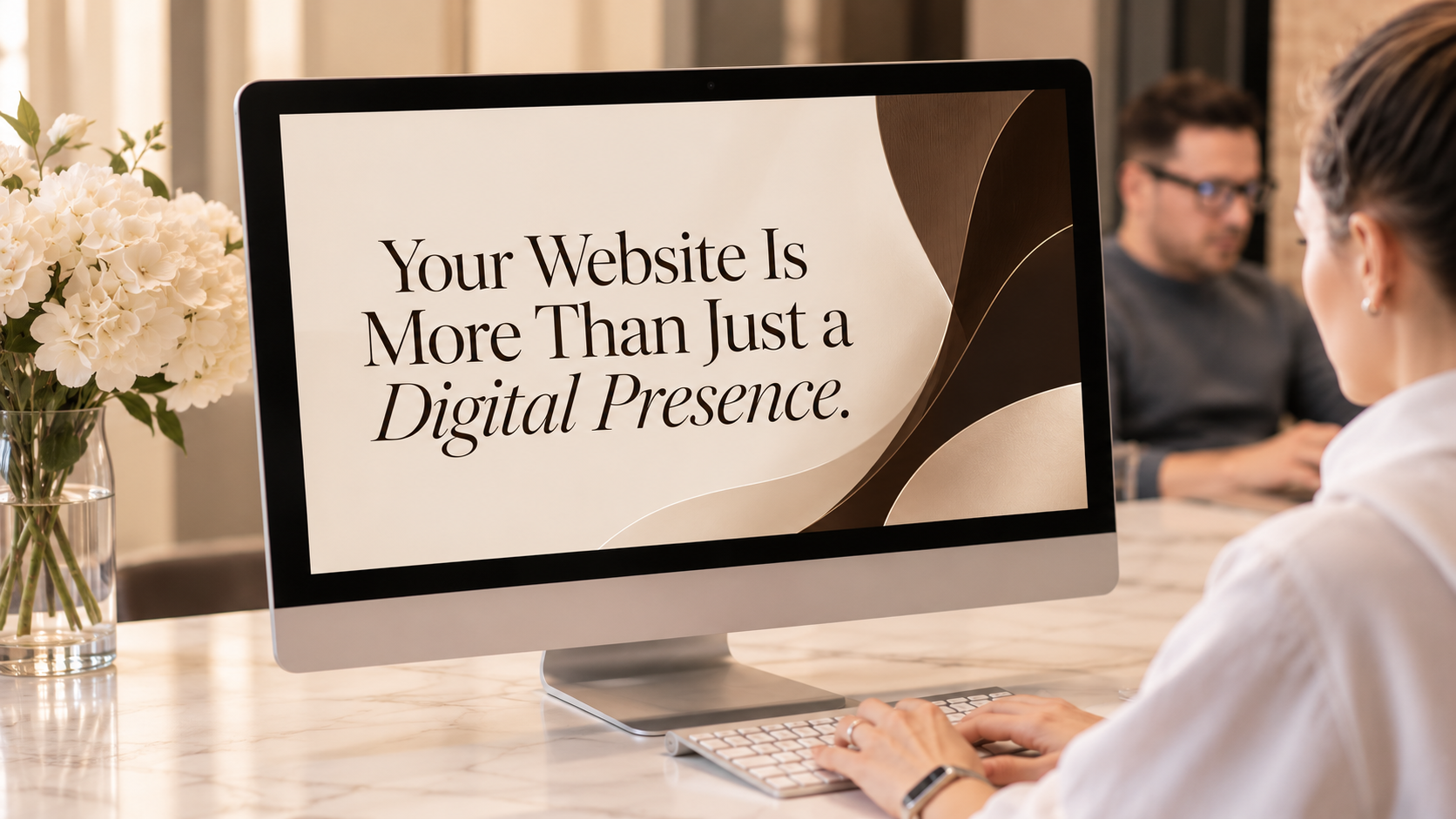
In a world where websites can be built in minutes, it's easy to believe that speed is the ultimate goal.
A website isn't simply a digital placeholder. It's often the first impression of your brand, the first interaction with a potential customer, and one of the most powerful tools your business has to build trust, communicate value, and drive growth.
Whether you're launching a new venture or refining an established brand, the real question isn't how quickly a website can be created. It's whether the website accurately reflects who you are, what you offer, and why someone should choose you.
The most effective websites are built with intention. They connect strategy with storytelling, create a seamless user experience, and guide visitors toward meaningful action. While AI website builders offer convenience and accessibility, professional web design provides the customization, brand alignment, and strategic thinking that many growing businesses require.
Before choosing between the two, it's important to understand not just how a website is built, but what it's ultimately meant to achieve.
Start with the business goal
Start with what you want to convey to consumers. A brochure-style site may only need clear service pages and contact information. A lead-generation site needs persuasive messaging, a friction-free form, and reliable tracking. An online store will require product navigation, checkout systems, and customer support requirements.
Build a useful foundation
AI builders can help draft layouts, headlines, and basic page structures. Their output still needs human review for factual accuracy, accessibility, brand consistency, mobile usability, and search visibility. A polished template cannot replace customer research or a differentiated value proposition.
Avoid common mistakes
Professional design becomes more valuable when a business has a broader audience, complex services, custom integrations, or an established brand. It can also help when a website receives visitors but fails to convert them into inquiries.
Measure what matters
Before deciding, compare total ownership costs, platform portability, analytics, editing flexibility, support, and the time needed to maintain the site. Try testing the user experience on a phone and ask someone unfamiliar with the business to explain its offer after a quick visit.
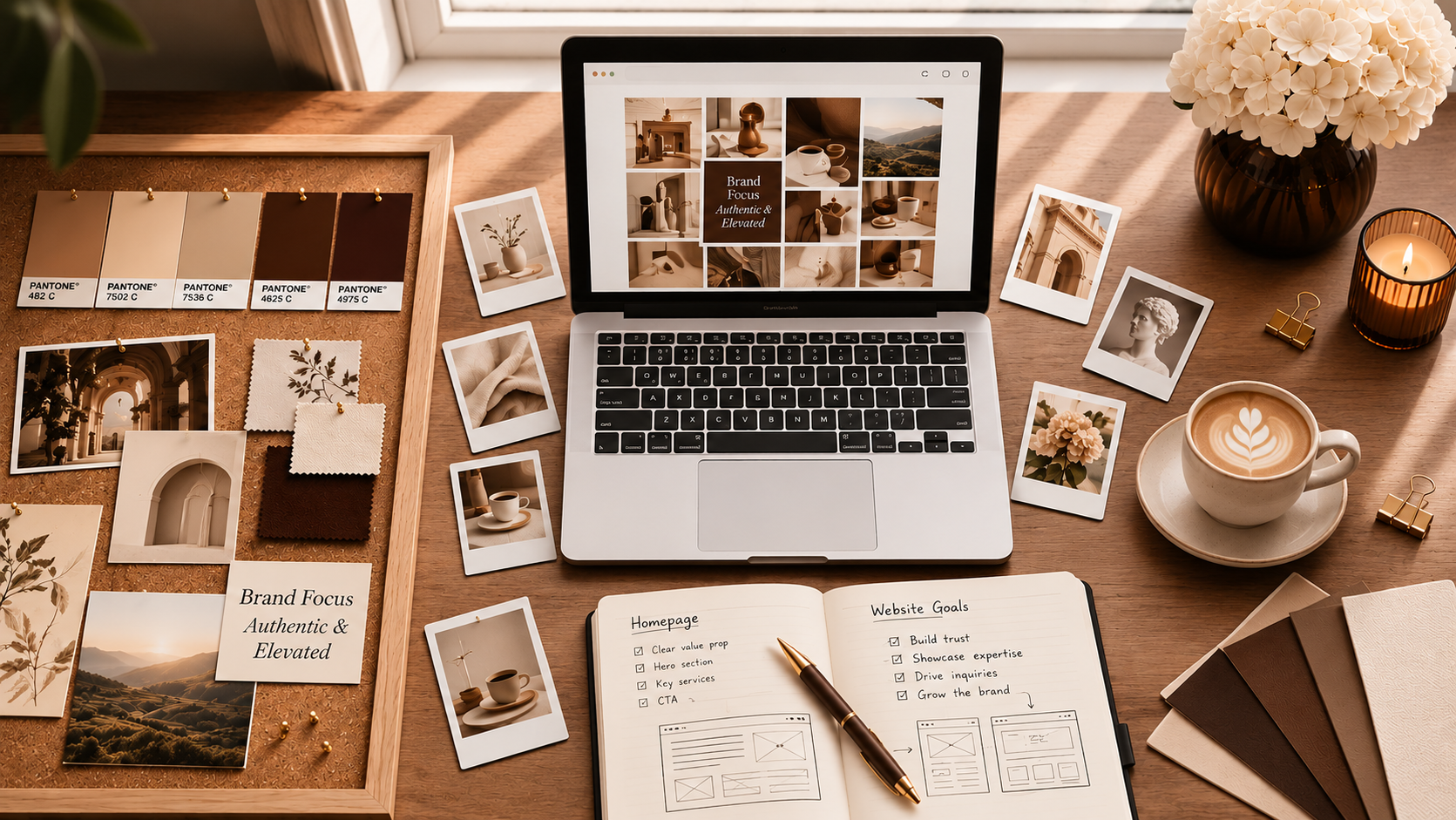
The bigger picture
Picture two businesses launching on the same afternoon. One chooses a template that publishes in an hour. The other spends time interviewing customers, refining its offer, and planning the path from homepage to inquiry. Neither approach is automatically right. What matters is whether the finished website helps a real visitor make a confident decision.
Make it meaningful
An effective comparison starts with the questions consumers will ask when they come to the website. What is the service offered? Is it for someone like me? What will happen after I reach out? Answer those questions before deciding which path to choose. Otherwise, even the most sophisticated design tools can produce a polished page that says very little.
A Website Should Do More Than Look Good
The best website is not necessarily the one that is built the fastest or with the most advanced tools. The best websites are the ones that help the visitor understand your product or service, build value, communicate trust, and help the user take the next step with confidence. Technology can accelerate the build, but strategy is what makes the experience meaningful.
